
Why Invest in a Fully Automatic Armature Winding Machine for Your Factory

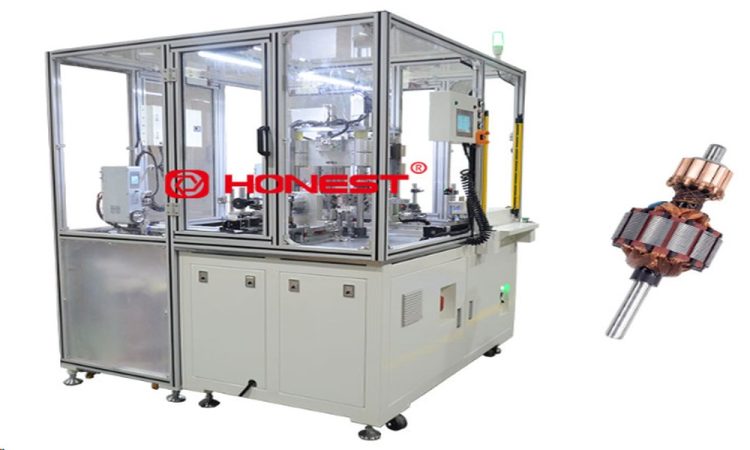

The global demand for electric motors is rising quickly due to rapid growth in industries such as electric vehicles, household appliances, industrial automation, and renewable energy systems. As production requirements increase, manufacturers are under pressure to improve efficiency, reduce costs, and maintain consistent product quality. In this competitive environment, investing in a fully automatic armature winding machine has become a strategic decision for modern factories aiming to scale production and improve performance.
A fully automatic armature winding machine represents a major advancement in motor manufacturing technology. It eliminates much of the manual effort involved in winding processes and ensures highly precise, repeatable results. For factories looking to stay competitive in the evolving motor industry, this technology offers significant long-term advantages.
Understanding the Role of Armature Winding in Motor Production
Armature winding is a core process in electric motor manufacturing. It involves placing copper wire into the armature slots to generate electromagnetic fields that drive motor rotation. The quality of this winding directly impacts motor efficiency, torque output, and durability.
Traditionally, armature winding was performed manually or with semi-automatic machines. While these methods were sufficient in earlier production systems, they often led to inconsistencies, slower production rates, and higher labor costs.
A modern armature winding machine-especially a fully automated system-solves these challenges by ensuring precise wire placement, consistent tension control, and uniform winding quality across all units.
What Makes a Fully Automatic Armature Winding Machine Different
A fully automatic armature winding machine is designed to handle the entire winding process without manual intervention. From wire feeding and tension adjustment to slot indexing, winding, and cutting, every step is controlled by advanced automation systems.
Unlike semi-automatic machines, fully automatic systems operate with minimal human input. This significantly reduces the chances of error while improving production speed and consistency.
The integration of servo motors, programmable logic controllers (PLC), and intelligent control systems allows the machine to execute complex winding patterns with high precision.
Higher Production Efficiency and Output
One of the most important reasons to invest in a fully automatic system is the dramatic increase in production efficiency. These machines can operate continuously at high speed, producing a large number of armatures in a short period of time.
For factories dealing with large-scale orders, this level of efficiency is essential. It allows manufacturers to meet tight deadlines and handle increasing market demand without expanding labor costs proportionally.
In addition, automated systems reduce downtime and improve overall production flow, contributing to higher factory productivity.
Improved Winding Accuracy and Motor Performance
Accuracy in armature winding is critical for ensuring high motor performance. Even small variations in wire placement or tension can affect motor efficiency, heat generation, and lifespan.
A fully automatic armature winding machine ensures precise control over every aspect of the winding process. The result is uniform coil distribution and consistent electrical characteristics across all products.
This level of accuracy improves motor efficiency and reliability, making the final product more competitive in the market.
Reduction in Labor Costs and Human Error
Labor costs are a significant factor in manufacturing operations. Manual winding processes require skilled operators and are more prone to inconsistencies.
By investing in a fully automatic armature winding machine, factories can significantly reduce dependence on manual labor. This not only lowers operational costs but also reduces the risk of human error.
Automation ensures that every unit is produced with the same quality standards, improving overall product reliability.
Enhanced Production Stability and Scalability
Scalability is essential for modern manufacturing businesses. As demand grows, factories need systems that can easily scale without compromising quality.
Fully automatic armature winding machines provide stable and continuous production capabilities. They are designed for long operational cycles and can handle high-volume production with minimal interruptions.
This stability allows manufacturers to expand production capacity efficiently while maintaining consistent output quality.
Importance in Electric Vehicle Manufacturing
Electric vehicles rely heavily on high-performance electric motors. The efficiency and reliability of these motors depend significantly on the quality of armature winding.
A fully automatic armature winding machine ensures that EV motor components are produced with high precision and consistency. This contributes to improved energy efficiency, better torque performance, and longer vehicle range.
As the EV industry continues to expand globally, demand for advanced winding automation will continue to increase.
Integration with Smart Manufacturing Systems
Modern factories are increasingly adopting Industry 4.0 technologies, where machines are interconnected and data-driven. Fully automatic armature winding machines are designed to integrate seamlessly into these smart manufacturing environments.
They can communicate with other production equipment, collect real-time data, and support predictive maintenance systems. This allows factory managers to monitor performance and optimize production efficiency.
Smart integration improves decision-making and helps reduce unexpected downtime.
Long-Term Return on Investment
Although the initial investment in a fully automatic armature winding machine may be higher compared to traditional equipment, the long-term benefits are significant.
Lower labor costs, reduced material waste, improved production speed, and higher product quality all contribute to strong return on investment over time.
Factories that adopt automation early often gain a competitive advantage in pricing, efficiency, and market responsiveness.
Challenges and Considerations
Despite its advantages, investing in a fully automatic system requires careful planning. High upfront costs, technical training, and maintenance requirements must be considered.
However, these challenges can be managed through proper supplier selection, operator training, and long-term service support agreements.
When implemented correctly, the benefits far outweigh the initial challenges.
Future of Armature Winding Automation
The future of armature winding technology is closely tied to advancements in artificial intelligence, robotics, and smart manufacturing systems.
Future machines are expected to feature self-optimizing control systems, enhanced fault detection, and greater flexibility in production.
As automation continues to evolve, fully automatic armature winding machines will become even more efficient, intelligent, and essential for modern manufacturing.
Conclusion
Investing in a fully automatic armature winding machine is a strategic decision for any factory involved in electric motor production. It offers significant benefits in terms of efficiency, accuracy, cost reduction, and scalability.
As global demand for electric motors continues to rise, manufacturers must adopt advanced automation technologies to remain competitive. Fully automatic systems provide the precision and productivity needed to meet modern industrial requirements.
In the long term, this investment not only improves manufacturing performance but also strengthens a company’s position in an increasingly competitive global market.