
Driving Business Growth Online: Strategies from PPC, Niche SEO, and Influencer Marketing Experts

Introduction: The Blueprint for Modern Growth

Many e-commerce businesses face a common challenge: getting visitors to their site is one thing, but converting them into loyal customers is another. It’s not just about attracting attention; it’s about making every visit count. This is precisely where conversion rate optimization (CRO) for e-commerce plays a crucial role. It’s the art and science of making your website more effective at getting visitors to take desired actions, like making a purchase.
We know that attracting visitors is only half the battle. To achieve sustainable online growth, we need to ensure that every marketing effort contributes to higher conversions. This guide will show you how to build a powerful digital marketing engine that drives both traffic and sales.
We will dive into how strategies like Pay-Per-Click (PPC) advertising, Niche Search Engine Optimization (SEO), and Influencer Marketing not only attract the right audience but also set the stage for maximum conversion. For truly Predictable ecommerce growth, these elements must work in harmony, creating a seamless journey from findy to loyal customer.

Understanding Digital Marketing Growth
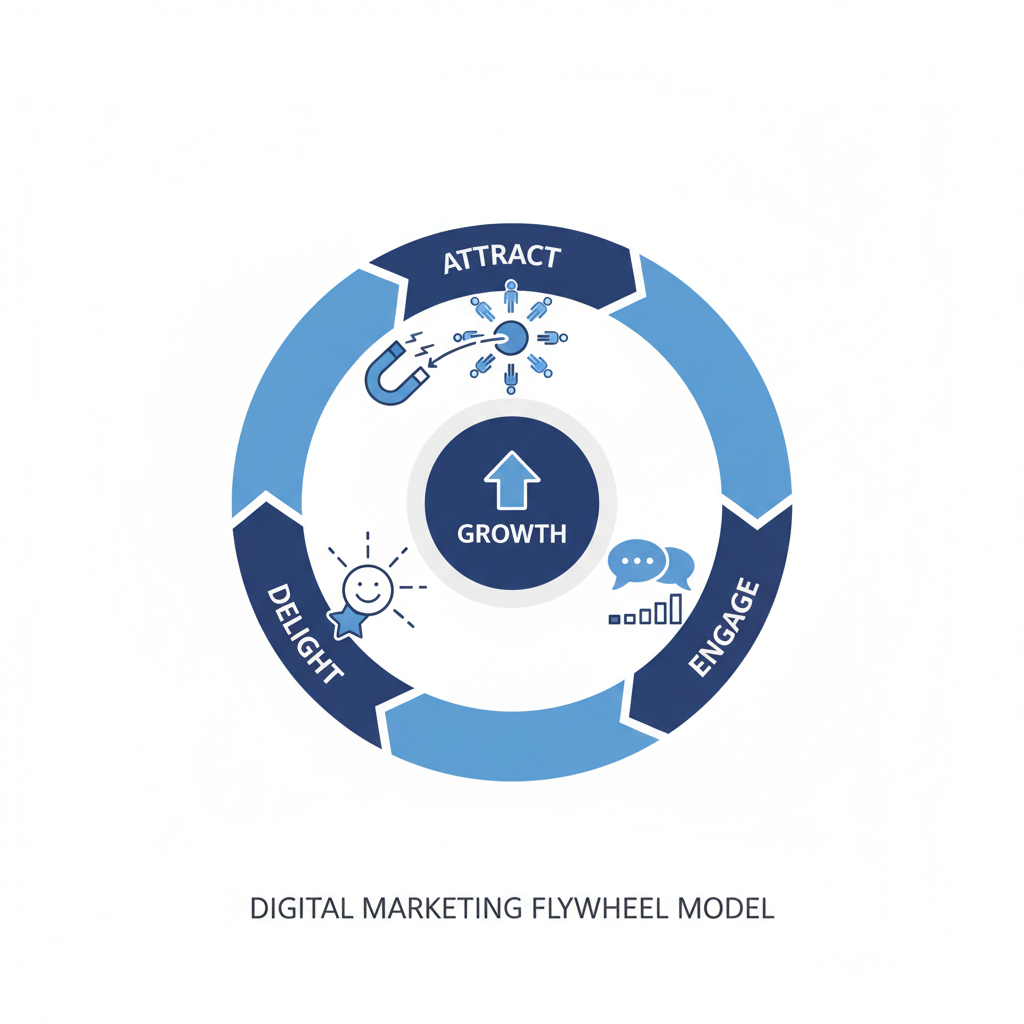
Digital marketing is more than just advertising. It’s about achieving real, measurable business growth. This means focusing on a strong Return on Investment (ROI) and building sustainable growth. We aim to reduce the Customer Acquisition Cost (CAC) while increasing Customer Lifetime Value (LTV). Our goal is to help you expand your market share effectively.
The Three Pillars of Accelerated Growth
This guide will focus on three core strategies that drive business growth online:
- PPC Advertising: For immediate, targeted traffic.
- Niche SEO: For long-term, organic visibility and authority.
- Influencer Marketing: For scaling trust and authentic audience engagement.
When these strategies are used together, they create a powerful, integrated approach. This synergy helps businesses grow faster and more efficiently.
Accelerating Momentum with Pay-Per-Click (PPC) Advertising
PPC advertising offers an immediate and highly controllable way to place your products or services directly in front of interested buyers. Unlike organic strategies that build over time, PPC delivers instant traffic, allowing you to quickly test offers, gather data, and scale campaigns. It’s an essential tool for any e-commerce business looking to jumpstart sales and gain market insights. By carefully managing bids and ad spend, we can ensure every dollar works hard to achieve a positive ROI.

Precision Targeting and Audience Segmentation
One of PPC’s greatest strengths lies in its ability to reach highly specific audiences. We can define our target market using various parameters:
- Demographics: Age, gender, income, education, and parental status.
- Geotargeting: Focusing ads on specific locations, from countries to local neighborhoods.
- Behavioral Targeting: Reaching users based on their online activities, interests, and past interactions with your site.
- Lookalike Audiences: Creating new audiences that share characteristics with your existing high-value customers.
- Retargeting: Showing ads specifically to users who have previously visited your website but haven’t converted.
- Customer Avatars: Developing detailed profiles of your ideal customers to inform all targeting decisions.
This precision ensures your ad budget is spent on those most likely to convert, maximizing efficiency and impact.
Crafting Compelling Ad Copy and Creatives
Effective PPC goes beyond just targeting; it demands compelling messaging. Your ad copy and creatives are your first impression, and they must resonate instantly with your audience.
- Value Proposition: Clearly communicate what makes your offer unique and beneficial. What problem do you solve? What desire do you fulfill?
- Call-to-Action (CTA): Guide users with clear, actionable language. Phrases like “Shop Now,” “Learn More,” or “Get Your Free Trial” drive engagement.
- A/B Testing: Continuously experiment with different headlines, descriptions, and visuals to identify what performs best. Small tweaks can lead to significant conversion lifts.
- Ad Copy Psychology: Leverage principles like scarcity, urgency, social proof, and authority to encourage clicks and conversions.
- Emotional Triggers: Appeal to your audience’s emotions, whether it’s aspiration, relief, or excitement, to create a stronger connection.
- Video Ads: Use short, engaging videos to capture attention and convey complex messages quickly, especially on social media platforms.
Optimizing Landing Pages for Conversion
A brilliant ad is wasted if it leads to a poor landing page. The landing page is where the conversion happens, and it must be carefully optimized. We focus on:
- Landing Page UX: Ensure the page is intuitive, easy to steer, and provides a seamless user experience.
- Message Match: The content and offer on the landing page must directly align with the ad that brought the user there. Consistency builds trust.
- Conversion Rate Optimization (CRO): This is paramount. Every element, from headlines to forms, should be designed to facilitate the desired action. We continuously analyze user behavior to identify and remove friction points.
- Lead Capture Forms: Keep forms concise, asking only for essential information. Consider multi-step forms for longer processes to reduce perceived effort.
- Page Speed: Slow loading pages kill conversions. We prioritize fast loading times to prevent bounce rates and ensure a smooth user journey.
Here are essential elements we consider for high-converting landing pages:
- A clear, benefit-driven headline.
- Compelling subheadings that elaborate on the offer.
- Visually appealing, high-quality images or videos.
- Concise, persuasive body copy highlighting key benefits.
- A prominent, singular Call-to-Action (CTA).
- Social proof elements like testimonials or trust badges.
- Minimal navigation to avoid distractions.
- Clear contact information or support options.
- Mobile responsiveness for seamless viewing on any device.
Measuring PPC’s Contribution to Digital Marketing Growth
Measuring the effectiveness of PPC is crucial for continuous optimization and proving ROI. We track a range of Key Performance Indicators (KPIs):
- Conversion Tracking: Setting up robust tracking for desired actions (purchases, sign-ups, lead forms) is fundamental.
- Cost Per Acquisition (CPA): How much does it cost to acquire a new customer or lead through PPC? This metric helps assess efficiency.
- Return on Ad Spend (ROAS): For e-commerce, this is vital – the revenue generated for every dollar spent on ads.
- Google Analytics: A powerful tool for understanding user behavior on your site after clicking an ad, including bounce rate, time on page, and conversion paths.
- Attribution Models: Understanding which touchpoints in the customer journey receive credit for a conversion allows for more informed budget allocation across channels.
By rigorously measuring these metrics, we can refine campaigns, reallocate budget effectively, and ensure PPC consistently contributes to overall digital marketing growth.
Building a Moat with Niche Search Engine Optimization (SEO)
While PPC provides immediate results, Niche SEO builds a long-term, sustainable competitive advantage. It’s about ensuring your target audience finds you organically when they search for solutions you provide. By focusing on specific, underserved segments of your market, you can establish authority, capture highly qualified traffic, and build a digital asset that continues to deliver value over time. A strong SEO foundation acts as a digital moat, protecting your market share and reducing reliance on paid channels.

The Power of Hyper-Targeted Keyword Research
The foundation of effective Niche SEO is hyper-targeted keyword research. We move beyond broad terms to uncover the specific language your ideal customers use when searching for solutions.
- Long-Tail Keywords: These are longer, more specific phrases (e.g., “organic cotton baby clothes for sensitive skin” instead of “baby clothes”). They have lower search volume but much higher commercial intent and conversion rates.
- Niche Markets: Identifying and understanding the unique needs and search behaviors within a specific niche allows us to tailor content precisely.
- Keyword Difficulty: We prioritize keywords where you have a realistic chance of ranking, avoiding highly competitive terms dominated by large brands.
- Search Volume: While niche, keywords still need sufficient search volume to drive meaningful traffic.
- Commercial Intent: We focus on keywords that indicate a user is close to making a purchase decision.
- Topic Clusters: Organizing content around broader topics, with a central pillar page and supporting cluster content, helps establish comprehensive authority.
Creating Authoritative Content for Niche Audiences
Once we identify the right keywords, the next step is to create content that not only ranks but also truly serves and educates your niche audience. This involves demonstrating Expertise, Authoritativeness, and Trustworthiness (E-A-T).
- Pillar Pages: Comprehensive guides on a broad topic that link out to more detailed cluster content.
- Blog Posts: Regular, informative articles that address specific questions and problems within your niche.
- Case Studies: Real-world examples demonstrating how your products or services have helped others, building credibility.
- How-To Guides: Practical, step-by-step instructions that solve a specific user problem.
For businesses in specialized sectors, creating this kind of in-depth, problem-solving content is key. For instance, if you’re in a specific service industry, understanding how to generate leads through digital channels, like in Digital Roofing Lead Generation, can provide valuable insights for content creation custom to your niche. This approach positions you as a trusted resource, attracting users who are actively seeking solutions.
The Role of Niche SEO in Long-Term Digital Marketing Growth
Niche SEO is not a quick fix; it’s a strategic investment that yields compounding returns. Its impact on long-term digital marketing growth is profound:
- User Experience (UX): Search engines prioritize websites that offer an excellent user experience. We optimize for intuitive navigation, clear layouts, and engaging content.
- Mobile-First Indexing: With the majority of searches happening on mobile, we ensure your site is fully responsive and optimized for mobile devices.
- Site Architecture: A well-structured website helps search engines understand your content and users find what they need easily.
- Internal Linking: Strategically linking related content within your site distributes authority and guides users through your offerings.
- Backlink Building: Earning high-quality backlinks from authoritative sites signals to search engines that your content is valuable and trustworthy.
By focusing on these elements, we help businesses build a robust online presence that consistently attracts high-quality organic traffic. This sustained visibility is a cornerstone of long-term business expansion and a critical component for achieving optimized online performance. For those seeking to optimize their online conversion rates, a comprehensive guide to ecommerce conversion rate optimization strategies can provide further actionable insights.
Scaling Trust with Influencer Marketing
Influencer marketing has evolved into a powerful strategy for building genuine connections and scaling trust. In an era where consumers are wary of traditional advertising, recommendations from trusted voices hold immense sway. By collaborating with individuals who have established credibility and engaged audiences in your niche, we can tap into communities that are already receptive to authentic endorsements. This approach fosters brand authenticity, drives word-of-mouth marketing, and leverages the burgeoning creator economy to your advantage.

Identifying the Right Influencers for Your Niche
The success of influencer marketing hinges on finding the right partners. It’s not about the biggest following, but the most relevant and engaged audience.
- Micro-influencers vs. Macro-influencers: Micro-influencers (10K-100K followers) often offer higher engagement rates and more niche audiences, while macro-influencers (100K+ followers) provide broader reach. We help determine the best fit for your specific goals and budget.
- Audience Demographics: We thoroughly analyze an influencer’s audience to ensure it aligns perfectly with your target customer profile.
- Engagement Rate: A high engagement rate (likes, comments, shares) indicates an active and responsive audience, which is more valuable than follower count alone.
- Brand Alignment: The influencer’s personal brand, values, and content style must be a natural fit for your brand to ensure authenticity.
- Authenticity Check: We look for genuine interactions and avoid influencers with suspicious follower counts or engagement patterns.
Structuring Campaigns for Authentic Engagement
Authenticity is the currency of influencer marketing. Our campaigns are designed to empower influencers to create content that feels natural and resonates with their followers.
- Creative Freedom: While providing clear guidelines, we encourage influencers to infuse their unique voice and style into the content.
- Storytelling: Influencers are natural storytellers. We help them weave narratives that integrate your product or service seamlessly into their lives.
- User-Generated Content (UGC): Campaigns can be structured to encourage followers to create their own content featuring your brand, amplifying reach and social proof.
- Giveaways and Contests: These are effective for generating excitement, increasing engagement, and growing brand awareness.
- Long-Term Partnerships: Building lasting relationships with influencers often yields better results, as their audience grows to trust their consistent recommendations.
For businesses looking to understand the dynamics and opportunities within the influencer space, exploring resources dedicated to Influencer marketing growth can provide a deeper dive into effective strategies and best practices.
Measuring the ROI of Influencer Collaborations
Measuring the return on investment for influencer campaigns can be complex, but it’s essential for optimizing future efforts. We track a variety of metrics to assess impact:
- Reach and Impressions: How many unique users saw the content, and how many times was it displayed?
- Engagement Metrics: Likes, comments, shares, saves – these indicate how well the content resonated with the audience.
- Referral Traffic: Tracking clicks from influencer content to your website helps quantify direct interest.
- Conversion Tracking: Using unique discount codes, custom landing pages, or tracked links to attribute sales or leads directly to influencer campaigns.
- Brand Sentiment Analysis: Monitoring mentions and overall perception of your brand before and after campaigns.
Here are some tools we leverage for tracking influencer campaigns:
- Google Analytics: For referral traffic and on-site behavior.
- Influencer Marketing Platforms: Dedicated software that provides analytics, CRM features, and campaign management.
- Social Media Analytics: Native insights from platforms like Instagram, TikTok, and YouTube.
- UTM Parameters: Custom tracking codes appended to URLs to precisely identify traffic sources.
- Unique Discount Codes: Attributing direct sales to specific influencers.
Integrating Strategies for Sustainable Digital Marketing Growth
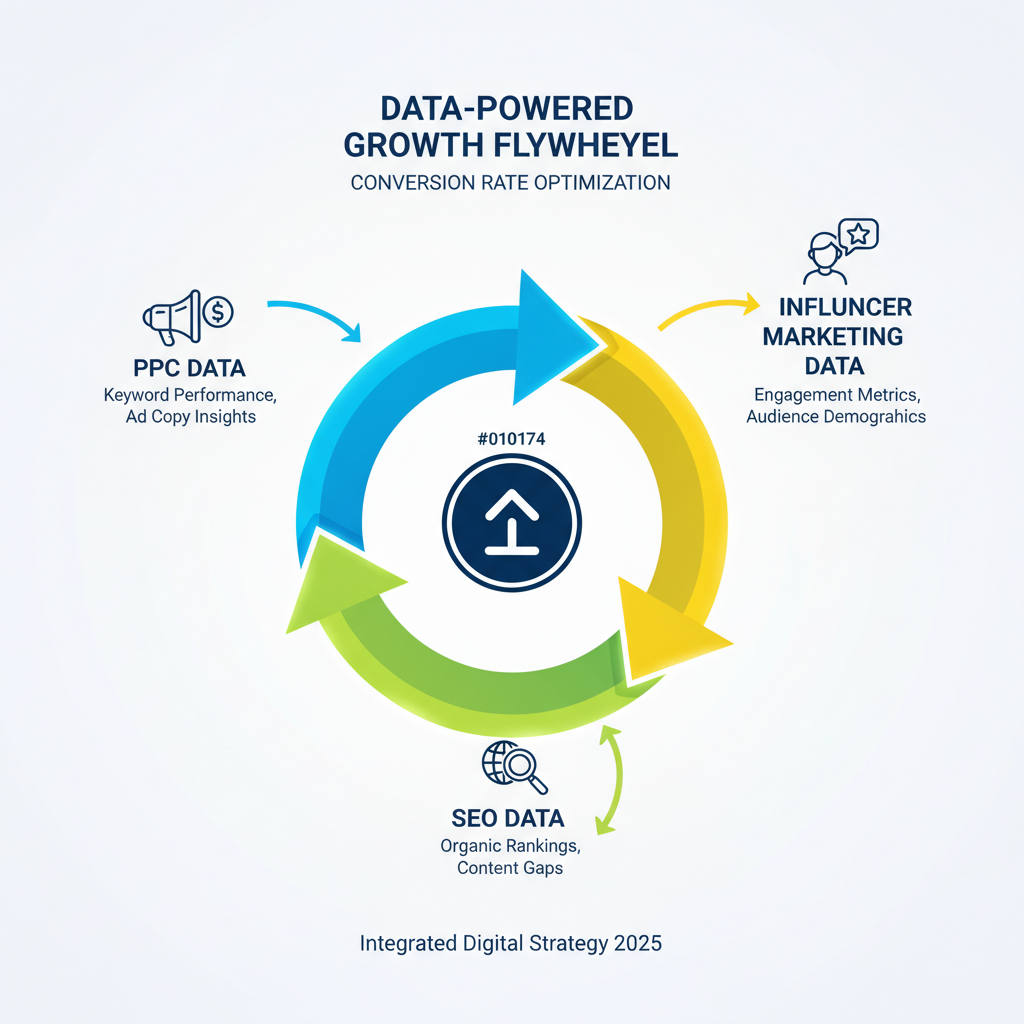
The true power of digital marketing is releaseed when PPC, Niche SEO, and Influencer Marketing are not treated as isolated silos, but as interconnected components of a unified strategy. This marketing synergy creates a holistic approach that maximizes reach, improves engagement, and drives conversions more effectively than any single channel could alone. By mapping the entire customer journey and ensuring a seamless omnichannel experience, we create a powerful, self-reinforcing system for sustainable digital marketing growth.
Creating a Virtuous Cycle of Data
Data is the fuel that powers this integrated approach. Insights from one channel can significantly improve the performance of another, creating a virtuous cycle of continuous improvement.
- Using PPC keyword data to inform SEO strategy: High-performing PPC keywords often indicate strong commercial intent. We can leverage this data to identify valuable long-tail keywords for Niche SEO content creation, ensuring our organic efforts target searches that are already proven to convert.
- Promoting SEO content with PPC: Once high-quality, authoritative Niche SEO content is created, PPC can be used to accelerate its visibility. Running targeted ads to blog posts or pillar pages can drive initial traffic, earn social shares, and attract backlinks, boosting organic rankings faster.
- Repurposing influencer content in paid ads: Influencer-generated content (IGC) often boasts high authenticity and engagement. We can repurpose top-performing influencer posts or videos into paid ad campaigns, leveraging their established trust and creative appeal to drive conversions at a lower cost.
- Using influencer insights for product development: Influencers are often at the forefront of consumer trends. Their feedback, audience comments, and popular content themes can provide invaluable insights for product development, helping businesses create offerings that truly resonate with their target market.
Aligning Messaging Across All Channels
Consistency in messaging is paramount for building a strong brand and a seamless customer experience. When PPC, SEO, and Influencer Marketing work together, they reinforce your brand’s core message and value proposition.
- Consistent Branding: Ensure visual elements, tone of voice, and brand personality are uniform across all ads, website content, and influencer collaborations.
- Unified Value Proposition: Clearly articulate what makes your brand unique and valuable, and ensure this message is echoed consistently, whether a customer encounters you via a Google search, a social ad, or an influencer’s story.
- Cross-Channel Promotions: Coordinate campaigns so that, for example, an influencer campaign promotes a specific product that is also highlighted in PPC ads and supported by in-depth SEO content on your blog.
- Seamless User Experience: From the ad click to the landing page, through your website, and even in post-purchase communications, the user journey should feel cohesive and intuitive.
- Building Brand Trust: Consistent, authentic messaging across multiple touchpoints builds credibility and trust, which are crucial for driving conversions and fostering long-term customer loyalty.
Frequently Asked Questions about Driving Digital Growth
How do I determine the right budget for my digital marketing efforts?
Budget allocation is a critical decision. We recommend starting small with a test budget, especially for new campaigns or channels. The key is to scale with ROI: once you identify what works, allocate more budget to those high-performing initiatives. A thorough CAC vs. LTV analysis will help you understand how much you can afford to spend to acquire a customer profitably. Researching industry benchmarks can also provide a realistic starting point, but always prioritize your own data.
Which strategy should a new business start with: PPC, SEO, or Influencer Marketing?
The best starting point depends on your business goals and immediate needs.
- PPC offers quick wins and immediate traffic, ideal for testing market demand and generating early sales.
- Foundational SEO (technical SEO, basic keyword research, core content) is essential from day one for long-term visibility, even if results take time.
- Influencer Marketing can build early buzz and social proof, especially if your product is visually appealing or targets a specific community.
Often, a blended approach is best: start with targeted PPC for quick traction, simultaneously lay the groundwork for SEO, and consider micro-influencer collaborations for authentic early engagement.
How long does it take to see results from digital marketing?
The timeline for results varies significantly by strategy:
- PPC can deliver immediate traffic and conversions, often within days or weeks of launching campaigns.
- Niche SEO is a long-term investment. You might start seeing initial ranking improvements in 3-6 months, but significant organic traffic and authority typically take 6-12 months or even longer.
- Influencer campaigns can generate immediate spikes in awareness and engagement, with sales often following shortly after. However, building long-term brand relationships through influencers takes sustained effort.
The compounding effects of an integrated strategy mean that results often accelerate over time as channels reinforce each other.
Conclusion: Your Path to Scalable Online Success
In the dynamic world of e-commerce, driving sustained business growth online requires more than just a single marketing tactic. It demands an integrated approach that leverages the immediate impact of PPC, the long-term authority of Niche SEO, and the authentic trust of Influencer Marketing. By treating these strategies as interconnected pillars, we can create a powerful digital ecosystem that not only attracts the right audience but also maximizes conversion rates at every touchpoint.
Continuous optimization, fueled by data-driven decisions, is the engine of this growth. By constantly analyzing performance, refining strategies, and adapting to evolving customer behaviors, businesses can open up their full online potential. A customer-centric approach—understanding their needs, pain points, and desires—is the guiding principle for all our efforts. The future of digital marketing belongs to those who master this synergy, building resilient, scalable, and highly profitable online businesses.